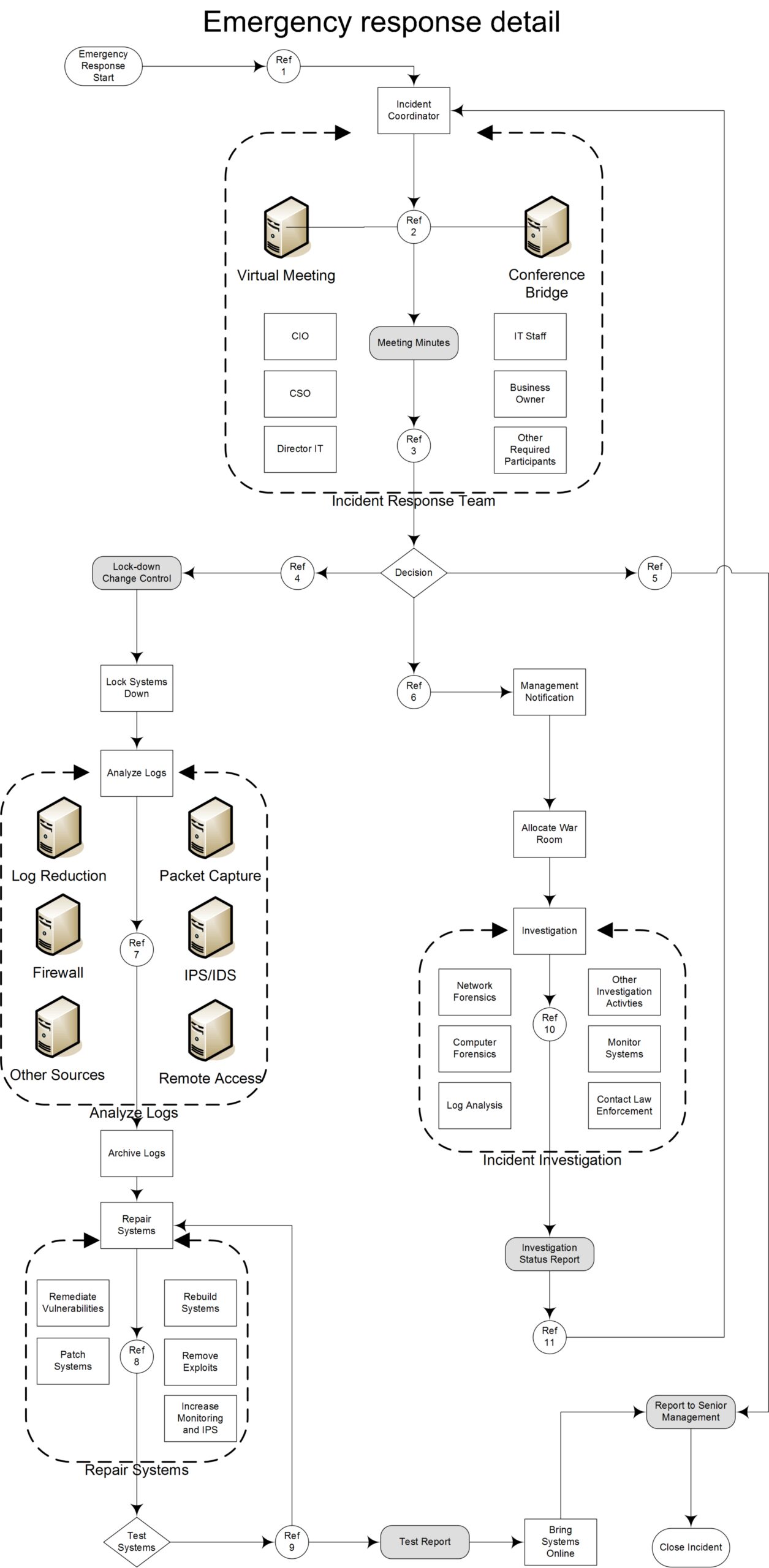
Purple teaming brings offensive red team and defensive blue team security professionals together into direct, real-time collaboration, instead of leaving them to operate in isolation from each other. It has emerged as a valuable evolution beyond traditional red team engagements, which operate largely separately from the defensive teams they are testing.
Why Traditional Red Team and Blue Team Separation Limits Learning
Traditional red team engagements operate with real separation from the blue team being tested – the blue team stays unaware of specific attack activity. That separation realistically simulates an actual attack scenario, but it often limits how much the blue team learns from any individual engagement. Blue team members do not get real-time insight into specifically why their detection did or did not succeed.
What Purple Teaming Changes
Purple teaming has red and blue teams work together in real time, often in the same room or on the same call. The red team explains their techniques as they execute them; the blue team explains their detection and response as it happens. That creates a rich, immediate learning exchange that traditional separated engagements simply do not provide.
A Walkthrough of a Typical Purple Team Session
A session usually starts by picking a specific technique off the MITRE ATT&CK framework – say, credential dumping via LSASS access on a Windows endpoint. The red team operator runs the technique live while narrating each step, and the blue team watches their EDR console in parallel to see what fires and what does not. If nothing triggers, the two teams stop right there, look at the raw telemetry together, and figure out whether the detection rule needs tuning or whether the data source simply is not being collected at all. That immediate feedback loop – technique, observation, gap, fix, retest – inside a ninety-minute session is the entire value proposition, and it is hard to replicate through a written report delivered three weeks after a traditional engagement ends.
Why This Collaborative Approach Accelerates Defensive Improvement
Purple teaming accelerates defensive capability improvement by providing immediate, specific feedback on exactly why a detection succeeded or failed. That lets the blue team make targeted improvements considerably faster than a purely retrospective, after-the-fact red team report alone ever could.
The Trade-off Purple Teaming Makes Compared to Traditional Red Teaming
Purple teaming trades some of traditional red teaming’s realistic surprise-attack simulation value for faster, more collaborative defensive learning. Organizations should understand this trade-off clearly – purple teaming does not test whether a blue team can detect an unannounced surprise attack the way traditional red teaming specifically does, because the blue team already knows an exercise is happening and roughly what to expect.
Why Organizations Benefit From Using Both Approaches
Many mature security organizations use both approaches for different purposes – periodic traditional red team engagements testing realistic surprise detection capability, typically once or twice a year, alongside more frequent purple team exercises, sometimes monthly, focused specifically on rapid, collaborative defensive capability improvement.
The Cultural Shift Purple Teaming Requires
Purple teaming requires a real cultural shift from viewing red and blue teams as adversarial toward viewing them as collaborative partners working toward the same shared organizational security goal – a shift that some organizations, particularly those with long-established adversarial red-versus-blue traditions and competitive team scoreboards, find surprisingly difficult to achieve in practice. Red team operators used to being graded on how many times they went undetected sometimes resist a format that asks them to explain their tricks to the people they are used to evading.
Why Purple Teaming Works Well for Testing Specific New Detections
Purple teaming suits testing specific new detection capability particularly well. A security team can verify that a newly deployed detection rule works as intended through immediate, collaborative testing. That beats waiting for the next periodic red team engagement to eventually, indirectly validate the same capability months later.
What Good Purple Team Facilitation Looks Like
The exercise works best with a neutral facilitator, often a third party or a senior security lead not directly on either team, whose job is to keep the session moving and stop it from turning into either a red team showcase or a blue team justification exercise. Without that structure, sessions tend to drift toward whichever side has the more senior or more talkative person in the room, and the quieter learning – a blue team analyst admitting a specific log source was never actually being ingested – gets talked over instead of documented. A written outcome for every technique tested, not just a general summary, is what turns the session into something the blue team can act on afterward instead of a memorable but ultimately vague afternoon.
Building Purple Team Practice Into Regular Security Operations
Organizations should consider incorporating regular purple team exercises into ongoing security operations. This collaborative approach accelerates defensive capability improvement. It should not replace periodic traditional red team engagements, though – those still provide the realistic surprise-attack testing value that purple teaming alone does not.
Measuring Whether a Purple Team Program Is Actually Working
Teams that run purple team exercises without tracking anything beyond “we did the session” often cannot tell whether the practice is improving detection over time. A useful metric is detection coverage against the specific MITRE ATT&CK techniques tested, tracked session over session, alongside mean time to detect for the techniques that do trigger an alert. A program that tests the same handful of easy, well-covered techniques repeatedly will show a flattering scorecard while leaving genuine gaps in coverage untested; rotating through a broader slice of the ATT&CK matrix each quarter, including techniques the blue team has not seen exercised before, gives a more honest picture of where detection actually stands.