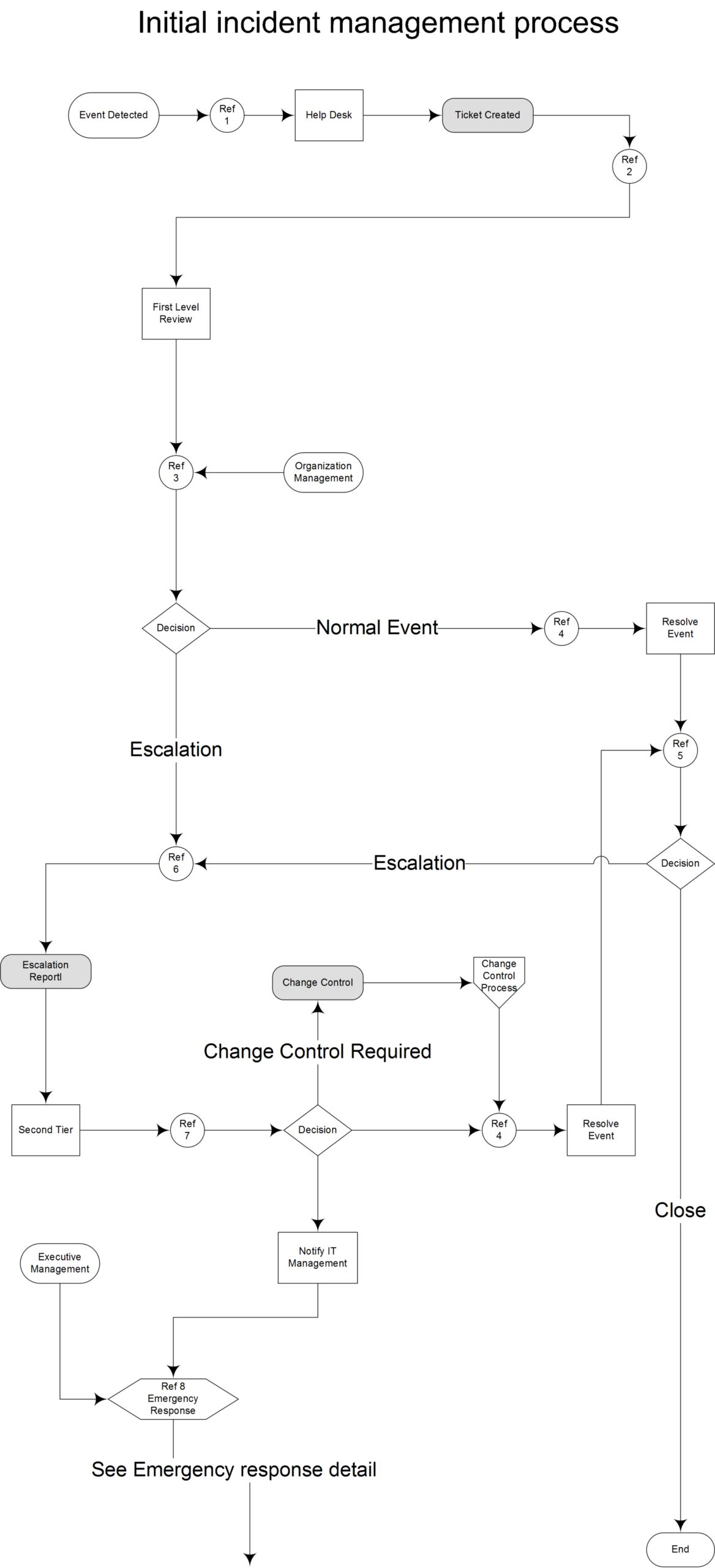
Tabletop exercises are structured, discussion-based simulations that walk a team through a hypothetical security incident. They deliver real incident response practice at a fraction of the cost and disruption of a full technical simulation, yet most organizations still underuse them relative to their actual value.
What a Tabletop Exercise Involves
A tabletop exercise gathers the relevant incident response stakeholders to talk through how they would handle a hypothetical scenario. The group walks through decision points and response actions verbally, without touching any real system the way a full live simulation would require. A facilitator runs the session from a written scenario, feeding new information to the group in stages and recording what the team decides at each step.
A Sample Scenario: What Ninety Minutes in the Room Looks Like
A typical exercise might open at 4:47 PM on a Friday: monitoring flags unusual file activity on a shared file server, and within twenty minutes several more servers show the same pattern. The facilitator hands the room a ransom note demanding payment in Monero within 72 hours. From there the injects start arriving one at a time – legal asks whether this triggers a regulatory notification clock, the IT lead admits the last successful backup test was in March, and someone has to decide whether to pull the server offline before finance has finished the week’s payroll run on it. None of this requires touching a real system, but it forces the same decisions a live incident would.
Why Tabletop Exercises Cost Considerably Less Than Full Simulations
Tabletop exercises require far less preparation than a full live simulation, and they carry no risk of actual system disruption. That makes them practical to run every quarter instead of once a year. A half-day facilitated session typically costs a small fraction of what a live red team engagement or a full disaster recovery drill runs. This is exactly why it makes sense to use tabletops for frequent practice, reserving the more expensive live exercises for periodic validation.
The Value of Testing Decision-Making Under Realistic Pressure
Tabletop exercises reveal how a response team thinks under the kind of time pressure and uncertainty a real incident involves. They expose gaps in incident response planning – unclear decision authority, missing escalation procedures – that a purely written plan will never surface on its own. It is common for a team to discover mid-exercise that nobody in the room has authority to approve a ransom payment or take a production system offline without a VP’s sign-off. That VP, of course, is not in the room.
The Facilitator’s Job Is to Make the Team Uncomfortable
A good facilitator does not let the scenario play out cleanly. Mid-exercise curveballs – the CEO is unreachable at a conference, the one engineer who knows the legacy backup system is on leave, a reporter calls asking about the breach before the internal comms draft is ready, the ransom demand doubles after the deadline passes – are what separate a useful exercise from a scripted rehearsal. Facilitators who let the team “win” too easily are doing the organization a disservice; the exercises people remember are usually the ones where the plan visibly broke down somewhere.
Why Cross-Functional Participation Matters for Tabletop Effectiveness
Effective tabletop exercises pull in participants beyond the technical security team: legal, communications, HR, and executive leadership. Real incidents demand coordinated response across all of these functions, and a tabletop is where an organization finds out whether that coordination works in practice or only on paper. A common failure mode is running the exercise with IT and security alone. The first time leadership hears the incident response plan explained is then during a real breach – the worst possible moment to be learning it.
The Role of Realistic, Organization-Specific Scenarios
Tabletop exercises deliver far more value when the scenarios are tailored to an organization’s own risk profile and systems. A generic scenario that ignores the company’s particular technology environment and business context wastes the room’s time. A SaaS company should be running scenarios involving its multi-tenant database and API keys, not a generic “malware on a laptop” story lifted from a template with no connection to how the business operates.
Why Tabletop Exercises Should Include Deliberately Difficult Complications
Effective tabletop exercises also build in realistic complications: key personnel unavailable, incomplete information, conflicting priorities. Real incidents rarely unfold cleanly. Testing how a team handles these complications is far more valuable practice than walking through an idealized, overly clean scenario.
How Often and How Formal: A Practical Cadence
A reasonable starting cadence is a focused 90-minute exercise every quarter for the core incident response team, plus one larger half-day, cross-functional exercise annually that pulls in executives, legal, and communications. CISA publishes free Tabletop Exercise Packages that make a decent starting template for organizations building their first scenario library. Mapping exercise objectives back to the incident handling lifecycle in NIST SP 800-61 also helps keep scenarios from drifting into creative writing untethered from what the plan needs to test.
The Post-Exercise Documentation That Makes Tabletops Valuable
Tabletop exercises deliver lasting value only when findings get documented and addressed afterward. Gaps identified in incident response planning provide no real improvement if they are discussed during the exercise and then forgotten with no follow-up remediation. A short after-action report with named owners and dates – not just a list of things that went wrong – is what turns the exercise from a one-off conversation into a real improvement to the plan.
Building Regular Tabletop Exercise Practice Into Security Programs
Organizations should treat tabletop exercises as a regular practice, not a one-time compliance checkbox. Run consistently, they measurably improve incident response readiness, and they do it at a fraction of the cost and disruption a full technical simulation requires to achieve comparable benefit.